01
Daily check-in
The young person can answer a short set of wellbeing questions when they want to. Missed days are allowed.
ASH helps autistic young people record how they feel and helps carers build a prospective record across several menstrual cycles. The aim is to make recurring premenstrual changes — or worsening of difficulties that are already present — easier to discuss when PMDD or PME is being considered.
ASH turns small daily observations into a longitudinal view that can be easier to discuss with a parent, therapist, psychiatrist, paediatrician or gynaecologist.
The young person can answer a short set of wellbeing questions when they want to. Missed days are allowed.
ASH waits for at least three comparable completed cycles before presenting a repeated-pattern summary. One difficult month is not enough.
Families can use the dashboard or an export when discussing patterns with a healthcare professional.
ASH does not label a diagnosis. It compares repeated daily records so carers and clinicians can see whether symptoms rise before menstruation, whether they settle outside that window, or whether difficulties remain present through the cycle and become worse premenstrually.
A repeated premenstrual rise with relatively lower scores outside that phase is one kind of pattern a clinician may consider when evaluating PMDD.
If difficulties remain present outside the premenstrual phase but repeatedly intensify before menstruation, that longitudinal detail can be relevant when PME is considered.
Sensory sensitivity, need for sameness, executive functioning, shutdown or overwhelm, impulsivity and communication effort are tracked separately rather than treated as PMDD diagnostic criteria.
“You choose whether you want to check in today. You can stop when you want. ASH is here to help you describe what has been happening — not to judge your answers.”
See the child check-in experience and the longitudinal carer view in ASH.
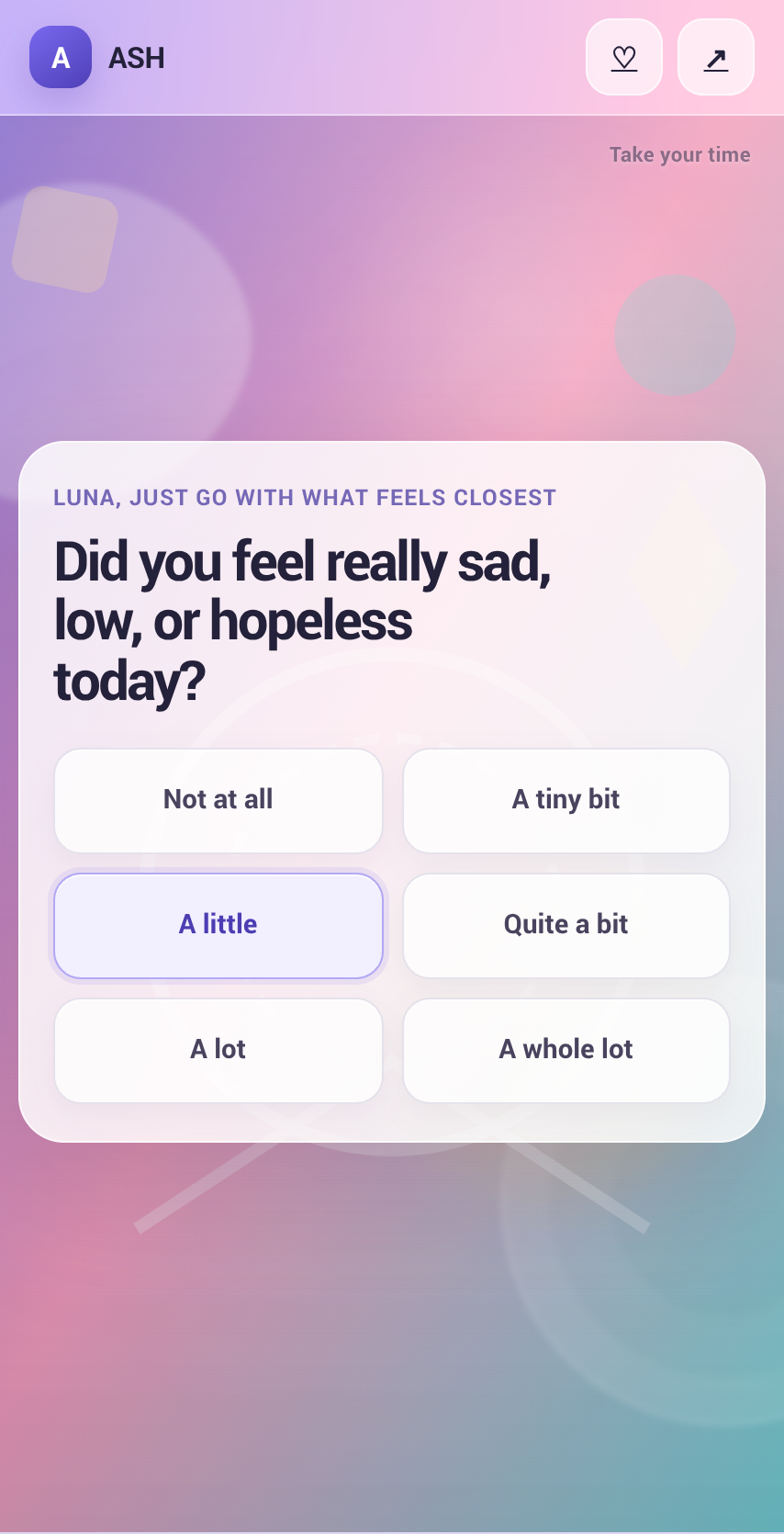
Designed for mobile use and low cognitive load.
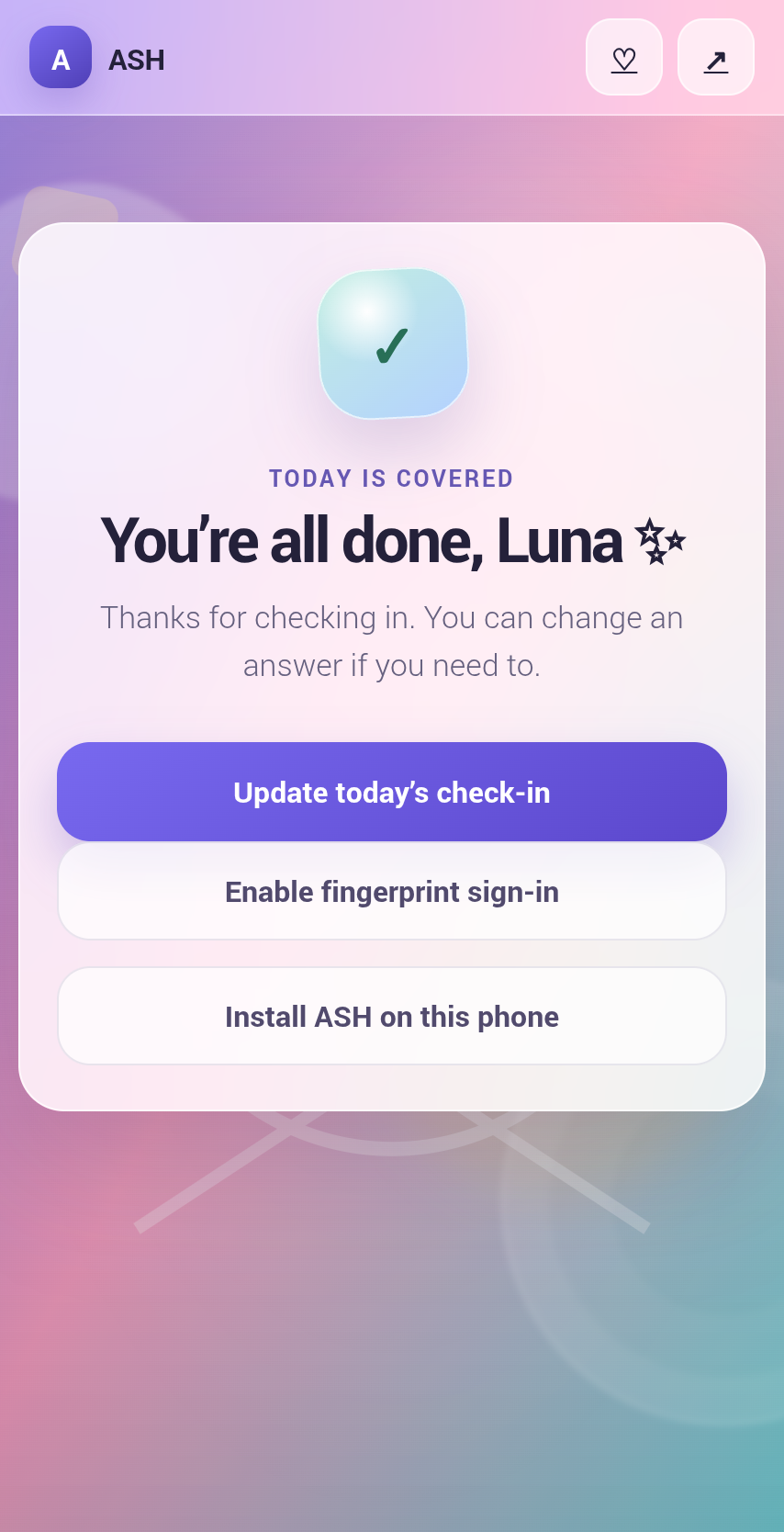
Completion status and recent entries without unnecessary detail.
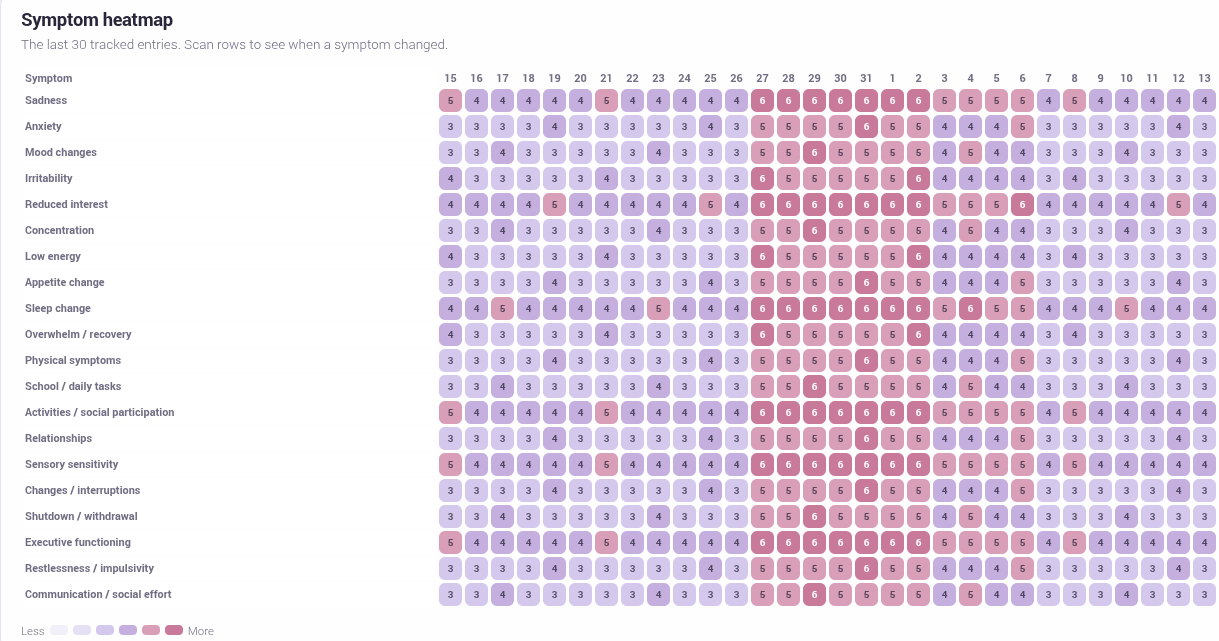
Review symptom, cycle and contextual information together across repeated cycles.
Daily information can help families describe when symptoms changed, whether they returned toward baseline and what else was happening at the time.
ASH makes its questions and scoring transparent. It records observations; it does not calculate a diagnosis or recommend a treatment.
Carers create and manage profiles in the private carer portal. Young people use the separate ASH child app for their own daily check-ins.